
The short version
- Book the trip only after weeks of consistent behavior - steady video calls, stable details, no money requests.
- Choose a city with direct flights, a walkable center and a public daytime spot for the first meeting.
- Book your own hotel room, let her decide how and when she travels, and share your itinerary with one person at home.
- Plan for roughly $2,000 to $6,000 for a first three-day trip, depending on season and city.
- Keep the itinerary light: one anchor activity per day, long meals, and an honest conversation on the last morning.
Are You Actually Ready to Meet? Five Signals to Check First
Readiness is measured in consistency over time, not in intensity. Trust a gradual, steady pattern rather than dramatic declarations. A woman who has been kind, curious and honest across several weeks of conversation is a far safer bet than one who overwhelmed you with passion in the first three days. Look for patterns across weeks, not isolated moments.
Five signals worth confirming before you spend money on a flight:
- Live video calls have happened more than once. Not a single short call, but several, at different times of day, with the camera on and no recurring technical excuses.
- Her story has stayed stable. Her job, her city, her family situation and her past all match what she said a month ago. Shifting details are the most reliable warning sign there is.
- No money has been requested or sent. Not for a visa, a phone bill, a plane ticket or a family emergency. This does not change before you meet in person.
- She plans concretely. Real dates, a real city, an opinion about which weekend works. Vague enthusiasm without specifics is not a plan.
- She respects your pace. A genuine partner respects your comfort level and your timeline, and expects the same in return.
If all five hold, the trip is a reasonable next step. If any one of them wobbles, wait. Waiting costs you a few weeks; ignoring the signal costs considerably more. That principle carries straight into how you handle lodging and logistics, which is the next section.
Choosing the City and a Neutral First Meeting Point
The right city is the one that is easy for both of you and awkward for neither. Four criteria matter: a direct or one-stop flight from your home airport, a reasonable journey for her, a walkable historic center where you can spend three days without a rental car, and enough public daytime venues that your first hour together happens in the open.
That first meeting point should be simple and public - a cafe terrace, a museum courtyard, a square with a fountain and people around. Late morning is ideal. It gives you an easy, unforced exit if either of you wants one, and it removes the pressure of a candlelit dinner as the very first thing you do face to face.
Three worked examples:
- Rome. Excellent US flight access, a center you can cross on foot, and endless neutral meeting spots. If you are already exploring Italian dating, Rome or Bologna makes the travel simple for a woman based anywhere in central Italy.
- Lisbon. Shorter flights from the East Coast than most of Europe, mild weather most of the year, and a relaxed, unhurried pace that takes the edge off a first meeting. A natural choice if Portuguese dating is where your conversations have been happening.
- Stockholm. Compact, safe, walkable, and effortless in English. Good for a first meeting where you want calm surroundings rather than sensory overload.
One practical rule: do not ask her to travel to a country she has never visited for a first meeting. Meeting in or near her own city, or somewhere she already knows, keeps her on familiar ground - and that comfort shows in how the weekend goes.
Separate Accommodation and Safety for Both of You
Book your own hotel room, and say so early. It is the single clearest way to signal that you are not treating this trip as a transaction. Let her decide independently whether she travels, when she arrives and where she stays. Her caution is not a rejection of you; it is exactly the behavior you would want from someone you cared about.
Keep the safety habits you used online running through the trip. Stay on the platform for messaging as long as it is practical, since platform conversations are monitored for known scam patterns. Hold back your home address, your employer and any financial details until trust has genuinely accumulated. Keep meaningful conversations documented in case you ever need to report something to the platform.
Tell one person at home
Give a trusted friend or family member your flight numbers, hotel name and rough daily plan, and check in with them once a day. It takes two minutes, it costs nothing, and it is standard practice for solo international travel - not paranoia.
A few more practical items: carry a photo of your passport in secure cloud storage plus a printed copy in your bag, agree in advance on how each evening ends so nobody has to negotiate it late at night, and keep your own pace. Set your own timeline for physical closeness and expect her to do the same.
Budget, Documents and What to Pack for a Europe Trip
A first three-day trip typically runs between roughly $2,000 and $6,000, and the spread comes almost entirely from season, city and how you fly. Shoulder-season Lisbon on a coach ticket sits at the low end; midsummer Stockholm in a business seat sits at the high end. Plan the range you can pay comfortably, not the one you can barely stretch to.
| Line item | Lower range | Higher range | What moves the number |
|---|---|---|---|
| Round-trip flight | $550 | $1,900 | Season, home airport, direct vs. connecting |
| Hotel, 3 nights | $330 | $900 | City, neighborhood and time of year |
| Meals and cafes | $250 | $650 | Long dinners add up quickly in Southern Europe |
| Local transport | $60 | $200 | Airport transfers, trains, occasional taxis |
| Activities and tickets | $80 | $300 | Museums, day trips, a concert or boat tour |
| Buffer | $300 | $700 | Currency spread, weather changes, the unexpected |
Our breakdown of the real cost of international dating covers subscriptions, translation and the longer-term picture. On the paperwork side, read the guide to visas and travel regulations in Europe before you book anything, since entry requirements have been shifting.
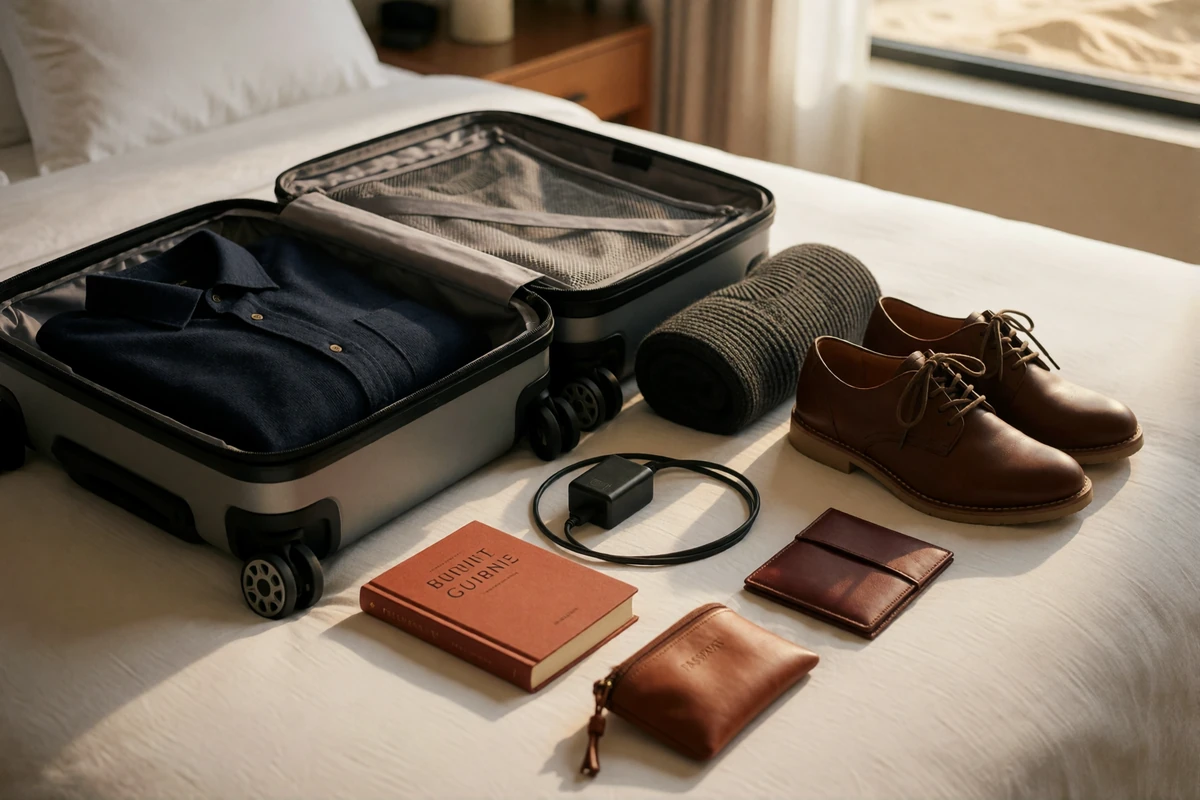
What to pack, geared to a man traveling for a first meeting: a universal power adapter, layered smart-casual clothing you can wear to both a museum and a good restaurant, one pair of broken-in walking shoes, a light rain layer, all medication in its original packaging with enough for extra days, a backup payment card kept separately from your wallet, printed copies of flight and hotel reservations, and a small gift that is thoughtful rather than expensive.
A Relaxed Three-Day Itinerary That Works
Three days is enough to know something real and short enough that neither of you feels trapped. The structure that works is one anchor activity per day and nothing else scheduled. Overplanning is the most common mistake men make on these trips.
-
Day one: a short daytime meeting, then an early dinner
Meet at 11:00 AM in a public square or cafe. Keep the first block to ninety minutes - a coffee and a walk. Separate in the afternoon so you both rest and reset, then meet again for an early dinner. Expect that dinner to run two to three hours; in Southern Europe a long table is the social norm, not a signal about the evening.
Rome: coffee near Piazza Navona, then dinner in Trastevere.
-
Day two: something she chose, then something you planned
Let her pick the morning. Her neighborhood, her favorite market, the museum she keeps recommending - being shown her world tells you more than any planned attraction. In the evening, deliver one thing you organized yourself, booked in advance. Learn a handful of phrases in her language before you go; the effort matters more than fluency almost everywhere in Europe.
Rome: a golden-hour walk up the Aventine to the orange garden, then dinner she picked. Lisbon: a tram to Belem, then a small fado house. Stockholm: the Vasa Museum, then an archipelago ferry at dusk.
-
Day three: a slow morning and an honest conversation
No sightseeing. A long breakfast and a direct conversation about what happens next: whether there is a next trip, roughly when, and who travels. Say what you actually think rather than what keeps the mood pleasant. Leaving without that conversation is how promising first meetings dissolve into three months of ambiguous messaging.
If your conversations have been with women in Spain, the same structure holds with later hours - dinner rarely starts before 9:00 PM. Our Spanish dating guide covers that rhythm in more detail. Across Southern Europe generally, treat emotional expressiveness as a strength rather than something to manage, and take her family and traditions seriously from the very start.
Questions to Ask Before Meeting an Online Date
These belong in a normal conversation over several weeks, not in one interrogation. Spread them out, answer them yourself first, and pay attention to whether the answers stay consistent.
- What are you actually looking for - a serious partnership, marriage, or something you are still figuring out?
- If this goes well, what does the next year look like to you?
- Would you consider relocating one day, or is staying near your family non-negotiable?
- Who is in your immediate family, and how often do you see them?
- How comfortable are you speaking English out loud versus writing it?
- How do you feel about splitting costs on this trip, and what feels fair to you?
- What would make this weekend a good one for you?
- Is there anything that would make you uncomfortable that I should know about now?
- Have you met someone from abroad before, and how did that go?
- What would you want me to know about you that does not come across in messages?
Best Time of Year to Visit Europe and Your Pre-Flight Checklist
The best time to visit depends on the region, and the shoulder months usually win. For the Mediterranean - Italy, Spain, Portugal, Greece, Malta - April through early June and mid-September through October give you warm weather, open terraces, thinner crowds and noticeably cheaper flights than July or August. The Nordic countries are at their best from June through August, when the light stretches past 10:00 PM and outdoor life is the whole culture. Central Europe peaks in September and October, when the cafe season is still running and the fall color arrives.
Pre-flight checklist: work through this the week before you fly
- Passport valid for at least six months beyond your return date, with two blank pages.
- Entry requirements confirmed for the specific country, including any current pre-travel authorization.
- Travel and medical insurance purchased, with the policy number saved offline.
- Flight, hotel and any restaurant reservations confirmed and printed.
- Your own hotel room booked separately, and she knows the arrangement.
- Bank and card issuer notified of travel dates, plus a backup card carried separately.
- Roughly $150 to $250 in local currency for cash-only cafes and small transit fares.
- International roaming or a local eSIM activated and tested before departure.
- Itinerary, flight numbers and hotel details shared with one trusted person at home.
- Emergency contacts saved offline, including her number and the local emergency line 112.
Keep Reading
A first in-person meeting is not a test you pass or fail. It is a three-day conversation held in better conditions than a video call, with a plan behind it and no financial or emotional gamble attached. Book the flight when the consistency is there, keep the itinerary light, protect both people's comfort, and let the weekend tell you what it tells you.